When it comes to weight loss, nutrition plays a key role in achieving your goals. The best nutrition tips for weight loss are not just about cutting calories they focus on making smart, healthy choices that nourish your body.
By following the best nutrition tips for weight loss, you can boost your metabolism, control hunger, and stay energized throughout the day. In this article, we’ll share simple and effective nutrition tips that can help you on your weight loss journey.
Best Nutrition Tips for Weight Loss: Focus on Whole Foods
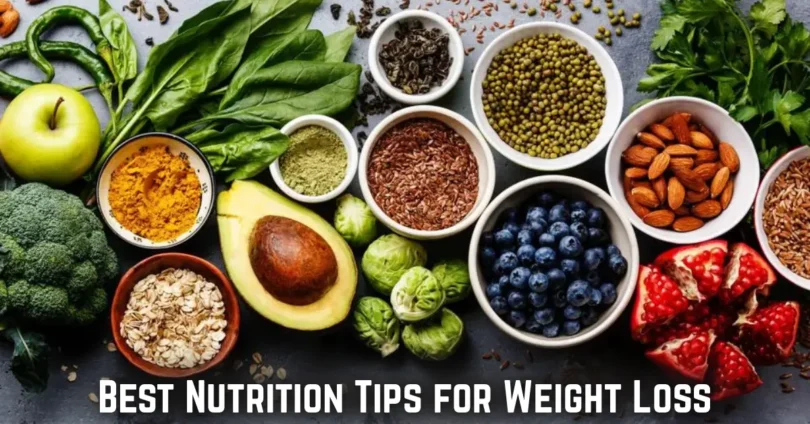
Whole foods like fruits, vegetables, and lean proteins should be your priority when trying to lose weight. These foods are nutrient-rich, help keep you full, and support overall health. Here’s why focusing on whole foods is a smart choice for weight loss:
- Nutrient-Dense
- Whole foods are packed with essential vitamins, minerals, and antioxidants that help your body function properly.
- These nutrients support metabolism and promote fat burning.
- Low in Calories, High in Volume
- Fruits and vegetables have fewer calories but more fiber, helping you feel full for longer without overeating.
- The high water content in whole foods also helps keep you hydrated and satisfied.
- Helps Control Hunger
- Lean proteins (chicken, fish, tofu) help to keep hunger at bay, preventing overeating throughout the day.
- Fiber-rich whole foods slow digestion, keeping you feeling full longer.
- Improves Digestion
- Whole foods are easier for your body to process, helping with digestion and reducing bloating.
- A healthy gut can support weight loss by improving metabolism and nutrient absorption.
Best Nutrition Tips for Weight Loss: Control Portion Sizes
Portion control is a crucial part of weight loss. Even healthy foods can contribute to weight gain if eaten in large amounts. By controlling your portions, you can enjoy your favorite foods without overeating. Here’s why portion control and mindful eating matter:
- Prevents Overeating
- Serving the right portion sizes helps you avoid consuming more calories than you need.
- Smaller portions allow your body to process food better and prevent excess fat storage.
- Encourages Mindful Eating
- Mindful eating means paying attention to your hunger cues and eating slowly.
- It helps you enjoy food more and recognize when you’re full, preventing mindless snacking.
- Helps Manage Caloric Intake
- By controlling portion sizes, you can more easily stay within your daily calorie limit for weight loss.
- You can eat a variety of foods without overindulging, keeping your meals balanced and healthy.
- Practical Tips for Portion Control
- Use smaller plates and bowls to trick your brain into feeling satisfied with less food.
- Measure out servings, especially for high-calorie foods like nuts, oils, and grains.
- Avoid eating straight from packages serve food in portions to avoid mindless snacking.
- Listen to your body’s hunger signals and stop eating when you feel satisfied, not stuffed.
Best Nutrition Tips for Weight Loss: Include Healthy Fats
Healthy fats are an important part of any balanced diet, even when you’re trying to lose weight. They help with satiety, support metabolism, and provide essential nutrients. Here’s how including healthy fats can aid in your weight loss journey:
- Boosts Fullness and Satiety
- Healthy fats like avocados and nuts keep you full for longer, reducing the chances of overeating.
- They help curb hunger between meals, making it easier to stick to your diet plan.
- Supports Metabolism
- Healthy fats support the body’s fat-burning processes by boosting your metabolism.
- They also help in the absorption of fat-soluble vitamins like A, D, E, and K, which are essential for overall health.
- Reduces Cravings
- Including healthy fats in your meals helps balance blood sugar levels, reducing cravings for sugary, high-calorie snacks.
- Healthy fats can stabilize your energy levels, preventing energy dips that lead to overeating.
- Good Sources of Healthy Fats
- Avocados: Rich in heart-healthy monounsaturated fats, they can be added to salads, smoothies, or toast.
- Nuts: Almonds, walnuts, and cashews are great sources of healthy fats and provide fiber, helping with digestion.
- Olive Oil: A great source of monounsaturated fats, use it in cooking or as a dressing for your salads.
Best Nutrition Tips for Weight Loss: Drink Water Regularly
Staying hydrated is one of the easiest and most effective ways to support your weight loss efforts. Drinking enough water can boost metabolism, control hunger, and improve overall health. Here’s why drinking water regularly is important for weight loss:
- Boosts Metabolism
- Drinking water increases the rate at which your body burns calories, especially after meals.
- A well-hydrated body functions more efficiently, helping you stay active and energized throughout the day.
- Controls Hunger
- Sometimes, our bodies confuse thirst with hunger. Drinking water before meals can help reduce unnecessary snacking.
- A glass of water before meals helps you feel fuller, so you’re less likely to overeat.
- Improves Digestion
- Water aids in breaking down food and absorbing nutrients, which is important for effective digestion.
- Staying hydrated prevents constipation, helping your body get rid of waste more efficiently.
- Practical Tips for Drinking More Water
- Carry a water bottle with you throughout the day to remind yourself to drink regularly.
- Set a reminder on your phone to drink water every hour.
- Add a slice of lemon or cucumber to your water for flavor without adding extra calories.
Best Nutrition Tips for Weight Loss: Avoid Processed Foods
Processed foods can be tempting, but they often contain hidden sugars, unhealthy fats, and excessive calories. These foods can slow down weight loss efforts and lead to overeating. Here’s how processed foods can hinder your progress:
- High in Empty Calories
- Processed foods often contain refined sugars and unhealthy fats that provide little to no nutritional value.
- These “empty calories” can lead to weight gain without providing the nutrients your body needs to stay healthy.
- Promote Overeating
- Many processed foods are designed to be addictive, making it easy to eat more than you need.
- They are often low in fiber and protein, meaning they don’t help you feel full or satisfied for long.
- Disrupt Hunger Signals
- The added sugars and preservatives in processed foods can spike blood sugar levels, leading to crashes and cravings later.
- These foods can confuse your body’s natural hunger signals, making it harder to control your appetite.
- Can Cause Inflammation
- Processed foods are often high in refined grains, unhealthy oils, and additives that may cause inflammation in the body.
- Chronic inflammation can affect your metabolism and hinder fat loss, making it harder to lose weight.
- Practical Tips for Avoiding Processed Foods
- Stick to whole foods like fruits, vegetables, and lean proteins that are naturally nutrient-dense.
- Read labels carefully and avoid items with long lists of artificial ingredients and preservatives.
- Prepare meals at home to control the quality and quantity of what you’re eating.
Best Nutrition Tips for Weight Loss: Eat More Protein
Protein is an essential nutrient for weight loss and overall health. It helps with muscle building, keeps you full longer, and can boost fat-burning. Here’s how eating more protein supports your weight loss efforts:
- Helps Build Muscle
- Protein is the building block of muscle tissue, and adding more protein to your diet helps build and maintain muscle mass.
- More muscle means a higher metabolism, which helps you burn more calories even at rest.
- Curbs Appetite
- Protein increases the feeling of fullness, reducing hunger and preventing overeating.
- Foods rich in protein, like eggs and chicken, slow down digestion, keeping you satisfied for longer periods.
- Boosts Fat Burning
- Eating protein can increase the thermic effect of food (TEF), which means your body burns more calories during digestion.
- A high-protein diet helps preserve lean muscle while encouraging the body to burn fat for energy.
- Regulates Blood Sugar Levels
- Protein helps balance blood sugar by slowing the absorption of carbohydrates.
- This prevents sugar spikes and crashes, reducing cravings and the tendency to snack on unhealthy foods.
- Practical Tips for Adding Protein to Your Diet
- Include protein-rich foods like chicken, turkey, tofu, beans, and fish in every meal.
- Try to add a source of protein to your snacks, such as a handful of nuts or a boiled egg.
Best Nutrition Tips for Weight Loss: Don’t Skip Meals
Skipping meals might seem like an easy way to cut calories, but it can actually work against your weight loss goals. Consistent meals are important for maintaining energy, controlling hunger, and supporting metabolism. Here’s why not skipping meals is key for weight loss:
- Keeps Your Metabolism Steady
- Regular meals keep your metabolism active, preventing it from slowing down during periods of starvation.
- Eating consistently helps your body burn calories more efficiently throughout the day.
- Prevents Overeating Later
- Skipping meals can cause intense hunger, leading you to overeat or make unhealthy food choices later.
- By eating regularly, you can avoid binge eating, keeping your calorie intake in check.
- Helps Control Hunger
- Eating at regular intervals keeps hunger at bay, making it easier to stick to your weight loss plan.
- Balanced meals provide steady energy and prevent cravings, especially for sugary or high-calorie foods.
- Supports Nutrient Absorption
- Regular meals ensure that your body gets a steady supply of essential nutrients, helping with digestion and overall health.
- Skipping meals can affect your ability to absorb nutrients properly, leading to deficiencies over time.
- Practical Tips for Consistent Meals
- Plan your meals and snacks ahead of time to make sure you’re eating regularly.
- Try to have a balanced meal every 3-4 hours, including protein, healthy fats, and vegetables.
Conclusion
Incorporating these best nutrition tips for weight loss into your daily routine can make a big difference. By focusing on whole foods, controlling portion sizes, eating healthy fats, staying hydrated, and including enough protein, you can support your weight loss goals while staying healthy.
Remember, consistency is key don’t skip meals, and always listen to your body’s needs. With the right habits, weight loss doesn’t have to be complicated.
Common FAQs on Best Nutrition Tips for Weight Loss
Can I lose weight by just following nutrition tips without exercise?
While nutrition plays a big role in weight loss, combining it with regular exercise will help you reach your goals faster and more effectively.
How many meals should I eat per day for weight loss?
It’s best to eat 3 balanced meals a day, with healthy snacks in between if needed. Consistency is key—don’t skip meals.
Are all fats bad for weight loss?
No! Healthy fats like those found in avocados, nuts, and olive oil are essential for your body and can help with weight loss when eaten in moderation.
How much water should I drink daily for weight loss?
Aim for at least 8 cups (2 liters) of water a day, but more if you’re active or live in a hot climate. Staying hydrated helps with metabolism and controls hunger.
How much protein do I need for weight loss?
Aim for 20-30 grams of protein per meal, depending on your activity level and weight loss goals. Protein helps build muscle and keeps you feeling full.
Can I eat carbs while trying to lose weight?
Yes, but focus on whole, complex carbs like brown rice, oats, and sweet potatoes. These provide energy and keep you full without causing blood sugar spikes.